








30Hour Value Added Certificate Course on Microsoft Power BI for SYBAF, SYBBI and SYBFM
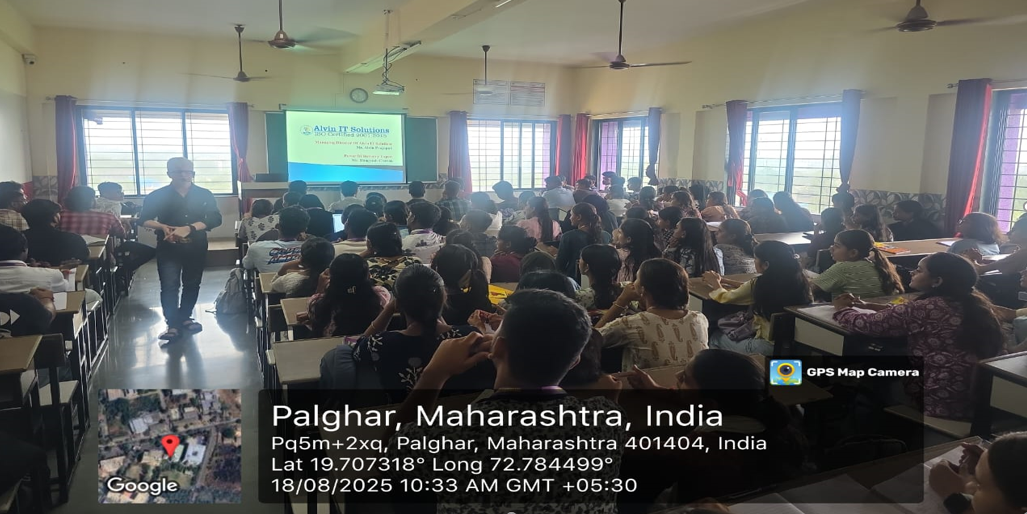
30Hour Value Added Certificate Course on Microsoft Power BI for SYBAF, SYBBI and SYBFM
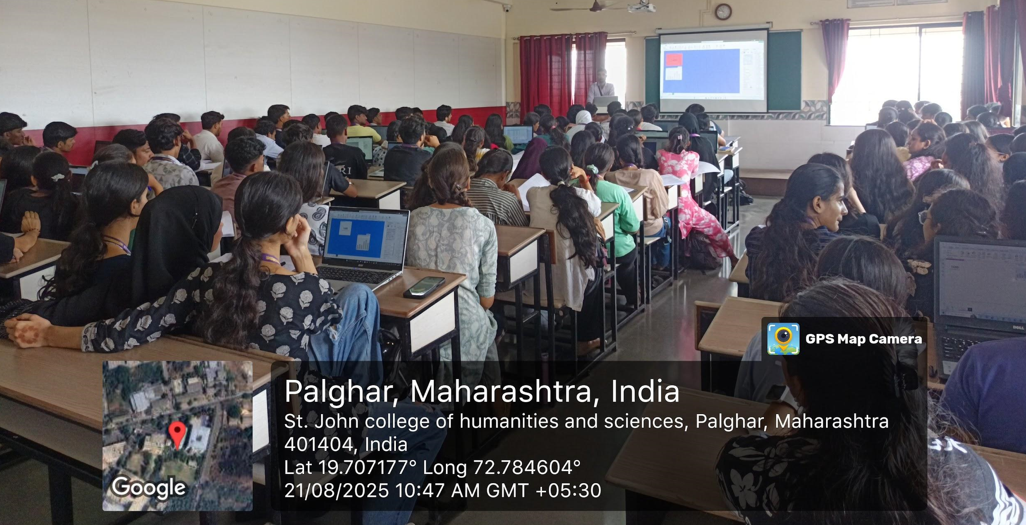
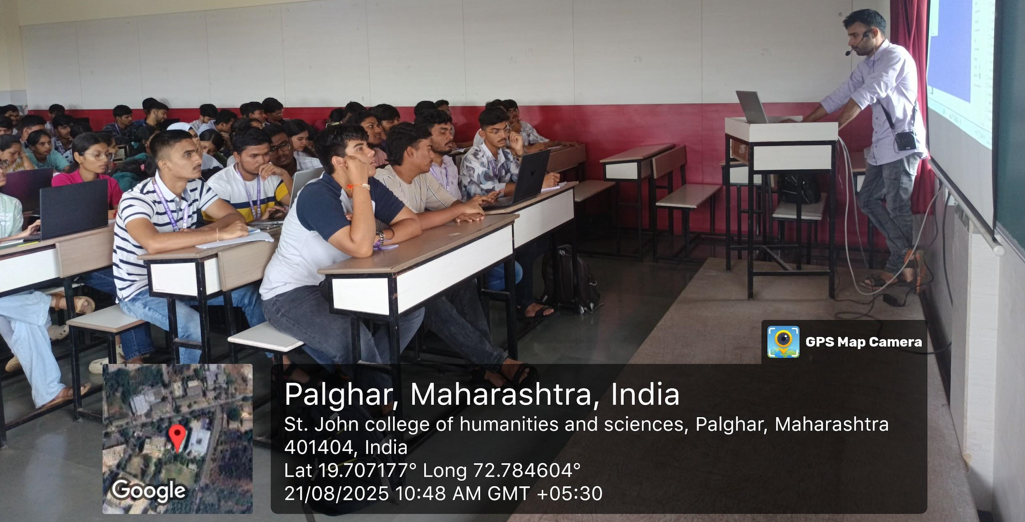
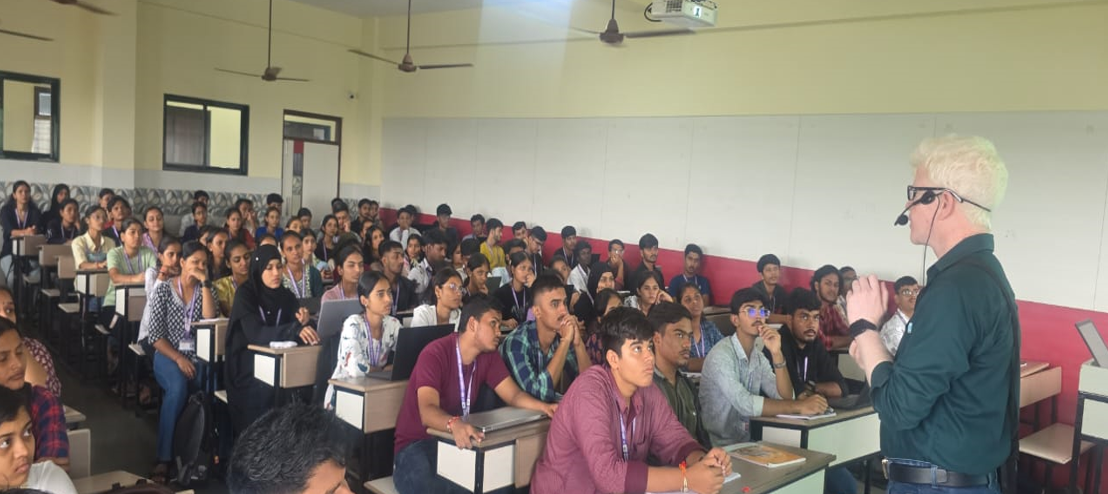
Department of BAF, BFM & BBI, St. John College of Humanities & Sciences, 30Hour Value Added Certificate Course on Microsoft Power BI for SYBAF, SYBBI and SYBFM from 18th August 2025 to 26th August 2025, under the guidance of expert resource person Mr. Alvin Prajapati and Mr. Bhagyesh Prakash Chavan.
Programme: 30Hour Value Added Certificate Course on Microsoft Power BI
Organized by: Department of BAF, BFM & BBI, St. John College of Humanities & Sciences (Autonomous)
Duration: 18th – 26th August 2025
Participants: SYBAF, SYBBI & SYBFM Students
Resource Persons: Mr. Alvin Prajapati (Day 1) & Mr. Bhagyesh Prakash Chavan (Days 2–5)
Date: 18th–26th August 2025
A six-day intensive Power BI training workshop was conducted from 18th to 26th August 2025 for undergraduate students, aiming to build foundational to advanced skills in data visualization, analysis, and reporting. The program commenced on Day 1 (18th August) with an orientation session introducing Microsoft Power BI, its interface, and basic functionalities. Students were guided through dashboard creation fundamentals, including loading datasets and selecting appropriate visualizations such as bar charts and pie charts. This introductory session emphasized the significance of data visualization in business analytics, with hands-on exercises and a practice assignment that marked the students’ first interaction with real-time data tools.
Day 2 (21st August) focused on enhancing visualization techniques and mastering data management features within Power BI. Participants explored a variety of chart types, including KPI, Bar, Pie, Clustered, and Matrix Charts, and learned to use slicers for interactivity. Report formatting tools, such as themes, labels, and conditional formatting, were covered in detail to ensure professional presentation. Students also engaged with aggregate functions like MIN, MAX, SUM, AVERAGE, and COUNT, and were introduced to data transformation techniques, including the creation of custom columns and setting appropriate data types—skills essential for producing accurate, interactive dashboards.
On Day 3 (22nd August), students delved into the ETL (Extract, Transform, Load) process using Power Query, focusing on converting raw data into analysis-ready formats. Key tasks included filtering, cleaning, and transforming datasets, as well as performing column and row-level transformations. The session also introduced techniques for merging and appending queries, enabling users to combine datasets efficiently. Through query management tools, students developed confidence in handling complex data workflows and ensuring data accuracy and consistency.
Day 4 (23rd August) introduced participants to Data Modeling and DAX (Data Analysis Expressions), a critical component of Power BI’s analytical power. The session covered building data models in Power Pivot, managing relationships, and understanding cardinality. A strong emphasis was placed on DAX functions, including logical, mathematical, text, time intelligence, and date/time functions, allowing students to create calculated columns and measures. These skills enabled deeper analytical insights and empowered students to work with large, dynamic datasets more efficiently than in traditional spreadsheet tools.
The training progressed to advanced visualization and sharing techniques on Day 5 (25th August). Students worked with Power View to design dashboards incorporating hierarchies, drill-down capabilities, KPI visuals, Tree Maps, Gauges, Cards, and Combo Charts. They also explored the Power BI Service for publishing reports, enabling collaboration through dashboard sharing, real-time updates, and the implementation of row-level security. This session bridged classroom learning with real-world applications, equipping participants with the tools to deliver business-grade reports and collaborate across organizations.
The final day, Day 6 (26th August), was dedicated to an assessment session that evaluated students through written tests and hands-on assignments. The assessment covered key areas, including data visualization (KPI, slicers, charts), data cleaning using Power Query, data modeling, DAX calculations, and dashboard creation and publishing. The outcome demonstrated the successful transfer of skills, with students securing 40% and above qualifying for certification. Overall, the workshop offered a thorough, structured learning experience, enabling students to master Power BI’s capabilities, from raw data handling to professional dashboard design, preparing them for further studies and roles in data-driven decision-making environments.
Final Summary:
The course successfully built skills from fundamentals to advanced Power BI concepts.
Students learned ETL, Data Modeling, DAX, Visualization, and Service publishing.
The hands-on approach ensured that learners gained practical analytics and business intelligence expertise.
The final assessment reflected a high level of understanding and application, preparing students for industry-ready analytics roles.