







30Hour Value Added Certificate Course on Investment & Portfolio Management for TYBAF, TYBBI and TYBFM

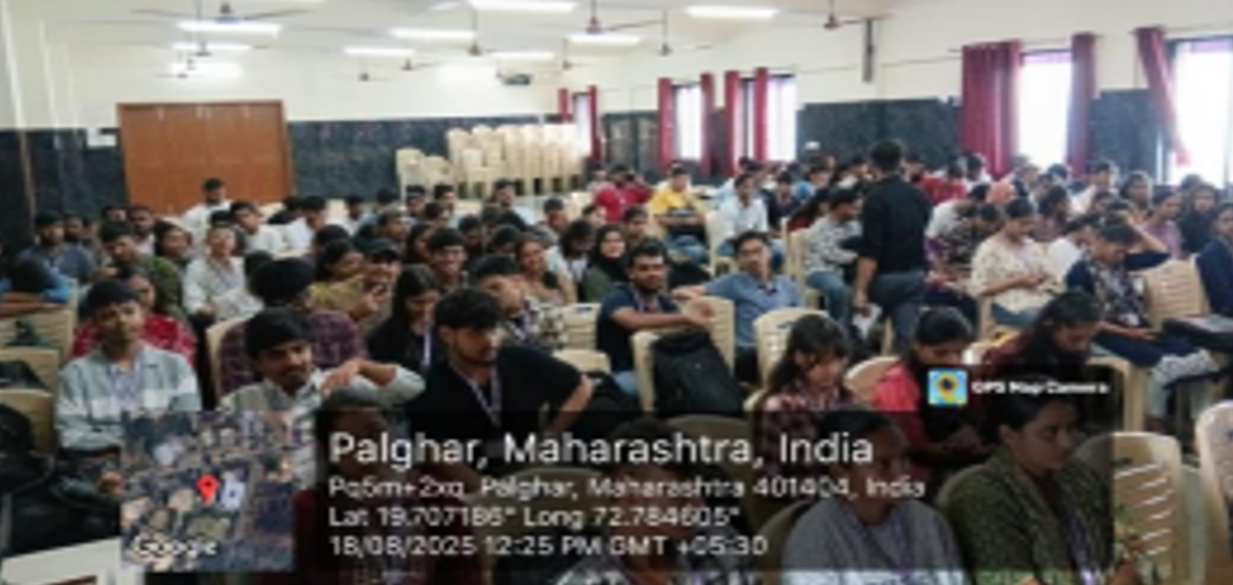

30Hour Value Added Certificate Course on Investment & Portfolio Management for TYBAF, TYBBI and TYBFM
Department of BAF, BFM & BBI, St. John College of Humanities & Sciences, 30Hour Value Added Certificate Course on Investment & Portfolio Management for TYBAF, TYBBI and TYBFM from 18th August 2025 to 26th August 2025 by Mr. Suketu Sanghvi, co-founder of Zetheta Algorithms Pvt. Ltd.
Programme: 30Hour Value Added Certificate Course on Investment & Portfolio Management
Organized by: Department of BAF, BFM & BBI, St. John College of Humanities & Sciences (Autonomous)
Duration: 18th – 26th August 2025
Participants: TYBAF, TYBBI & TYBFM Students
Resource Persons: Mr. Suketu Sanghvi, co-founder of Zetheta Algorithms Pvt. Ltd.
A structured six-day workshop on Investment and Wealth Creation was conducted from 18th to 26th August 2025, designed to provide undergraduate students with a foundational to advanced understanding of investment principles, financial planning, and portfolio management. The workshop commenced on Day 1 (18th August) with an introduction to the importance of investments in the modern economy, highlighting the foundational principle of higher risk, higher return. Students explored the benefits of early investing, including the power of compounding, and examined diverse investment avenues such as equities, mutual funds, and real estate. Real-life examples like the growth of Tesla stock and real estate value appreciation helped bridge theory with practice. Additionally, the session drew parallels between finance and emerging technologies, stimulating curiosity and engagement. An interactive Q&A session concluded the day, encouraging active student participation.
Day 2 (21st August) focused on financial planning and portfolio diversification, beginning with an interactive budgeting activity to help students differentiate between needs and wants. A quiz reinforced key concepts related to safe and risky investments, comparing government securities, corporate bonds, and stocks. The concept of portfolio diversification was introduced as a key strategy for risk mitigation. Global economic influences, such as the impact of inflation resulting from excessive money printing, were discussed. Additionally, students were introduced to valuation techniques including the Dividend Discount Model (DDM), Net Present Value (NPV), Weighted Average Cost of Capital (WACC), and Capital Asset Pricing Model (CAPM), each supported with practical examples. The day concluded with a discussion on risk awareness, covering various types such as market volatility, default, liquidity, and inflation risk.
Day 3 (22nd August) emphasized the distinction between investment and speculation, underscoring the idea that speculation, often compared to gambling, lacks the foundational research and purpose that investment requires. Students were taught how to balance risk and return through knowledge, discipline, and professionalism. The role of professional decision-making in investments was highlighted, along with an exploration of various asset classes such as equity, debt, real estate, and forex. A focus on Behavioral Portfolio Theory introduced students to the psychological aspects of investing, particularly the irrational behaviors that often influence decision-making. The integration of AI and data analytics in investment strategy development was also discussed. The session concluded with essential investment guidelines: start early (ideally between 25–35 years), remain consistent, practice disciplined saving and investing, and continue lifelong financial learning.
Day 4 delved into advanced investment strategies, introducing students to alternative investment instruments such as commodities, derivatives, and foreign exchange. The session featured a detailed study of mutual funds and Exchange-Traded Funds (ETFs) as balanced-risk investment products. Students also gained introductory knowledge about hedging techniques and the use of derivatives to manage market volatility. Discussions included case studies that contrasted successful investment portfolios with those that failed, helping students understand the practical consequences of strategic versus poorly planned investments.
On Day 5, the focus shifted to practical application and current investment trends. Students participated in group activities to build mock investment portfolios and engaged in role-play exercises, simulating decision-making in fluctuating market conditions. The session also explored common behavioral biases, such as overconfidence and herd mentality, which often distort rational investment decisions. Furthermore, the role of technology in modern finance was discussed, with emphasis on AI, machine learning, and fintech innovations in portfolio management. The day concluded with a thoughtful dialogue on ethical investment practices and the importance of financial responsibility.
The workshop culminated on Day 6 (26th August) with a comprehensive assessment and reflection session. Students participated in a written test covering key concepts such as valuation models, portfolio diversification, and risk-return analysis. In addition, case study analysis and group presentations on portfolio-building exercises allowed students to apply their learning in practical scenarios. The reflection session provided an opportunity for students to share their personal learning experiences, while faculty and resource persons offered constructive feedback. Successful participants who demonstrated conceptual clarity and engagement were awarded certificates of completion. The workshop effectively equipped students with essential investment knowledge, practical skills, and ethical understanding—laying a solid foundation for future financial planning and wealth creation.