







30Hour Value Added Certificate Course on Income Tax for FYBAF, FYBBI and FYBFM

30Hour Value Added Certificate Course on Income Tax for FYBAF, FYBBI and FYBFM
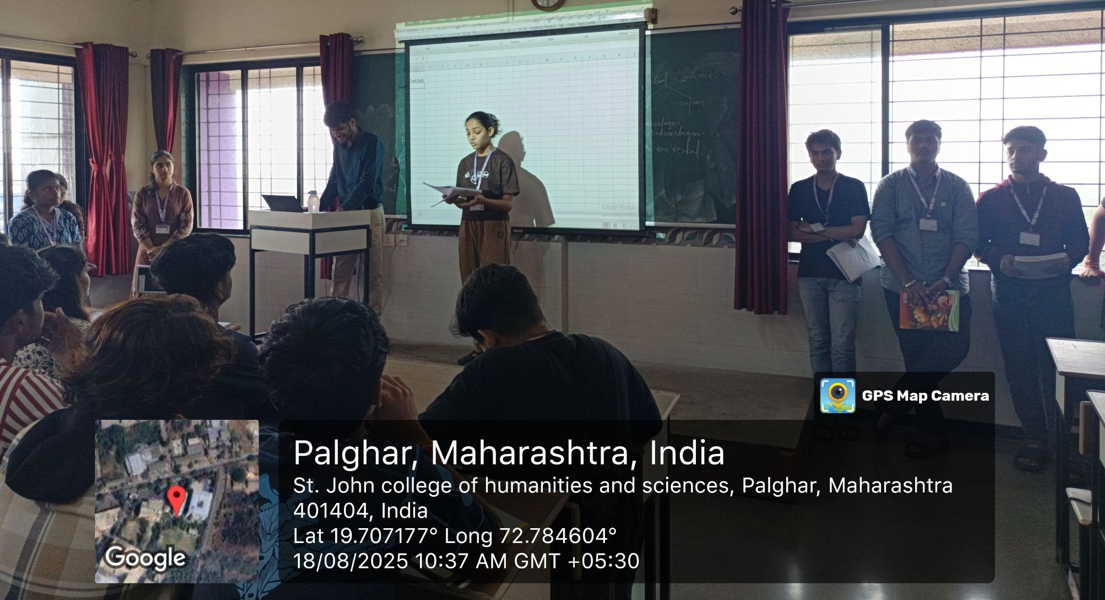
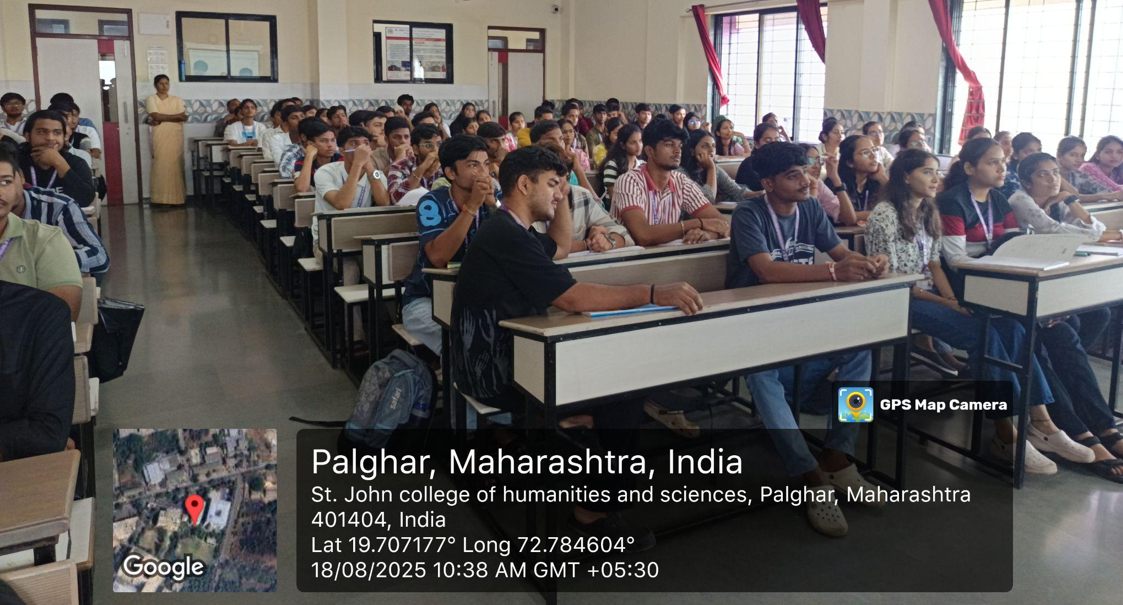
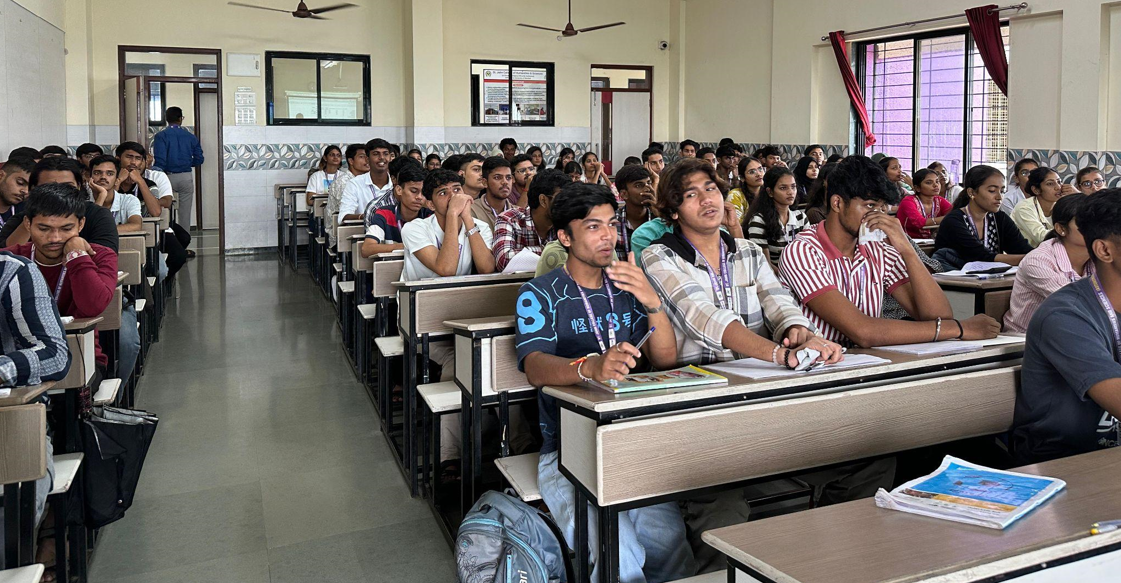
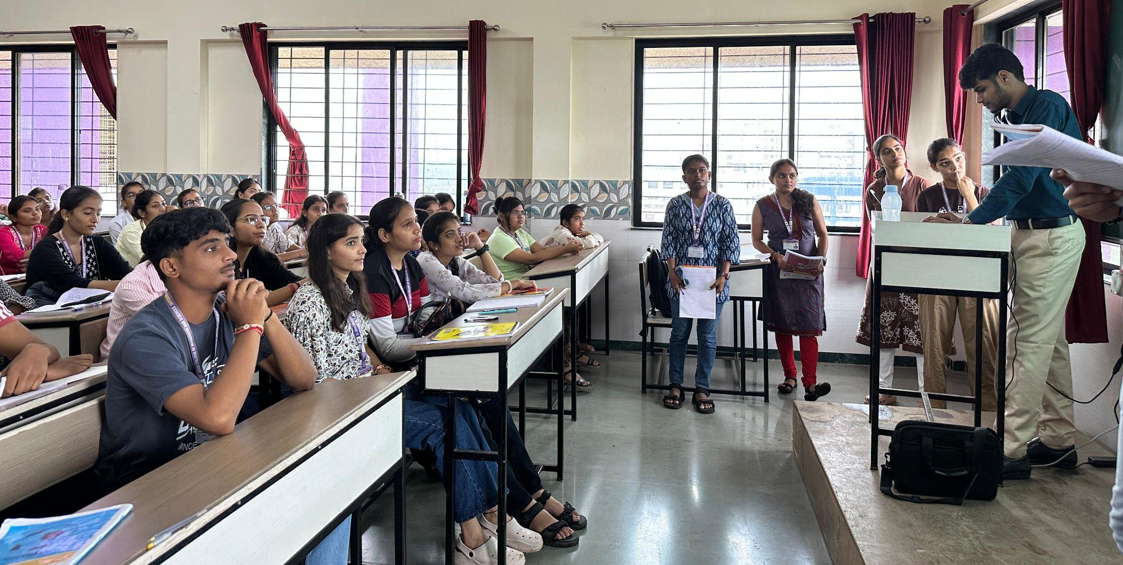
Department of BAF, BFM & BBI, St. John College of Humanities & Sciences, 30Hour Value Added Certificate Course on Income Tax for FYBAF, FYBBI and FYBFM from 18th August 2025 to 26th August 2025, under the guidance of expert resource person CA Manav Milind Shah, with the final assessment session conducted by Mr. Saroj Jha.
30Hour Valued Added Certificate Course on Income Tax for FYBAF, FYBBI, FYBFM
Organized by: Department of BAF, BFM & BBI, St. John College of Humanities & Sciences
Resource Persons: CA Manav Milind Shah
Date: 18th–26th August 2025
A comprehensive taxation workshop was conducted between 18th and 26th August 2025 for students of FYBAF, FYBFM, and FYBBI, under the guidance of expert resource person CA Manav Milind Shah, with the final assessment session conducted by Mr. Saroj Jha. The program commenced on 18th August with an insightful introduction to taxation, focusing on its necessity, its integral role in nation-building, and its function as a tool for economic stability and development. Participants engaged in an interactive ₹100 crore budget simulation, offering a practical glimpse into fiscal allocation and public finance. The session further delved into the historical evolution of Income Tax in India, beginning with its inception in 1860 and culminating in the formulation of the Income Tax Act, 1961, which comprises 23 chapters, 14 schedules, and 298 sections. Essential tax terminology such as Assessee, Previous Year (PY), and Assessment Year (AY) was clearly defined, laying a strong conceptual foundation. The classification of five heads of income—namely Salary, House Property, Business or Profession, Capital Gains, and Other Sources—was introduced, along with a comparative analysis of the Old vs. New Tax Regime, supported by practical examples. The proposed Income Tax Bill 2025, with its focus on a single tax year and reduced litigation, was also discussed, highlighting future tax reforms.
On Day 2 (21st August), the focus shifted to an in-depth analysis of tax slabs, exemptions, and deductions, along with the determination of residential status (Resident and Ordinarily Resident, Resident but Not Ordinarily Resident, Non-Resident), which plays a pivotal role in assessing tax liability. Through hands-on problem-solving exercises, students were able to apply concepts to real-life scenarios, further reinforcing their understanding. Day 3 (22nd August) emphasized the significance of income tax in financial planning and national development, with a reiteration of key terminology and practical tax calculations, enhancing the link between theory and application.
Days 4 and 5 (23rd & 25th August) provided a focused study on the five heads of income. Detailed discussions were held on components of Income from Salary, including applicable exemptions and deductions, followed by Income from House Property and its treatment for self-occupied versus let-out properties. Income from Other Sources—such as interest and dividends—was addressed, along with Capital Gains, highlighting the difference between short-term and long-term gains, and the importance of indexation. The sessions concluded with a thorough understanding of how residential status impacts the computation of total taxable income and strategic approaches to optimize tax liability.
The workshop culminated on Day 6 (26th August) with an Assessment Session conducted by Mr. Saroj Jha, where participants were evaluated on their grasp of taxation fundamentals, including heads of income, residency rules, and tax calculations. Through practical exercises and problem-solving tasks, students demonstrated active engagement, clarity of understanding, and identified areas for further improvement. Overall, the workshop provided a solid theoretical and practical grounding in taxation, fostering fiscal responsibility, compliance awareness, and real-world application skills necessary for advanced studies and professional competence in the financial domain.