



Second Year & Third Year Induction Programme for A.Y. 2025
Second Year & Third Year Induction Programme for A.Y. 2025
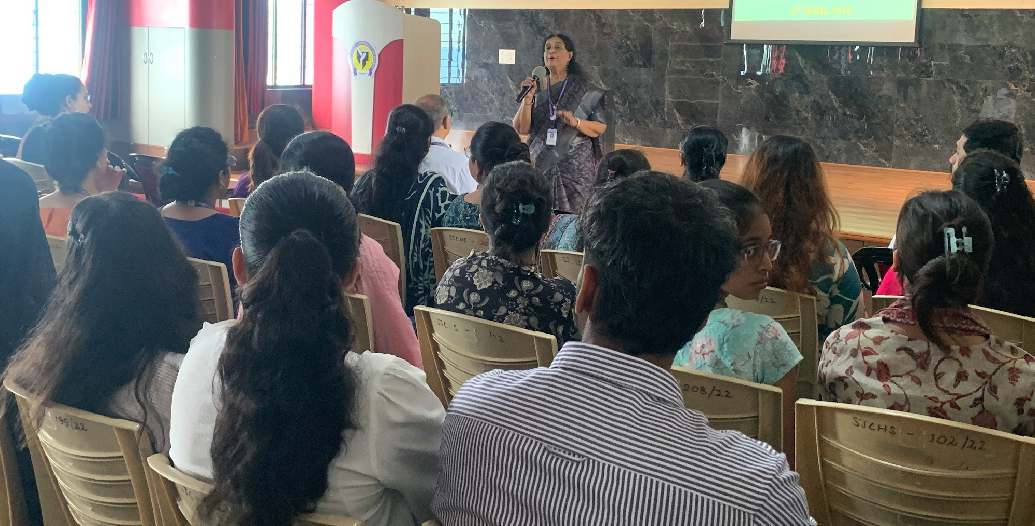
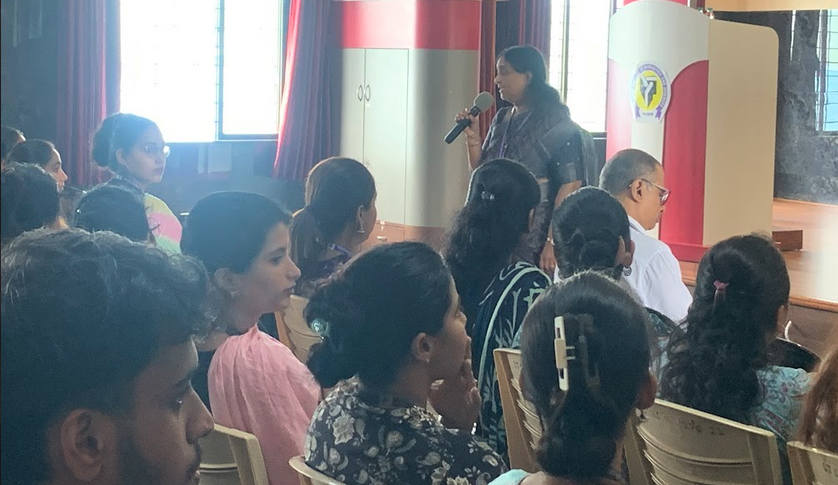
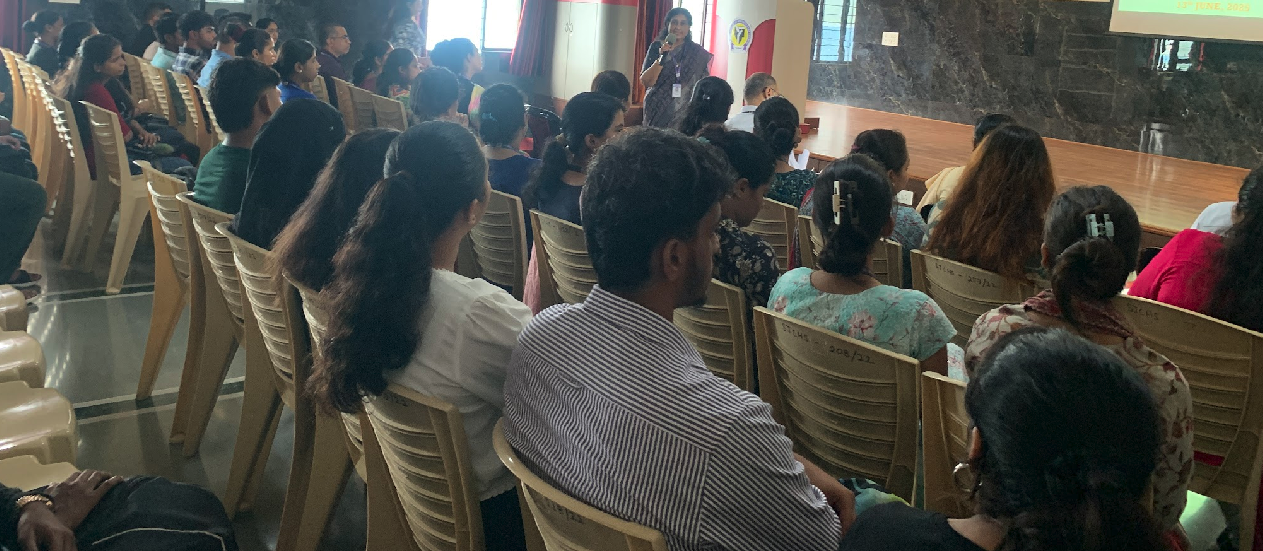
The orientation programme organized on 13th June 2025 commenced with a warm welcome to the Second and Third Year students of all streams . The purpose of the session was to familiarize students with the autonomous structure of the institution, academic processes, expectations, and opportunities available during their course of study. \
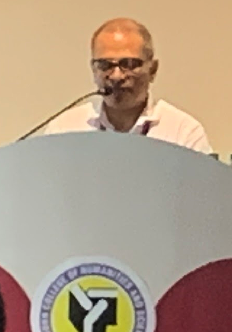
Dr. Muktha Jacob (Principal) addressed the gathering and explained the concept of autonomy. She highlighted that autonomy gives the institution the freedom to:
● Design its own syllabus according to the latest industry trends.
● Introduce innovative teaching and learning methods.
● Implement flexible and effective evaluation systems.
She clarified that although the college operates autonomously in academic matters, the degree will still be awarded by the affiliating university, ensuring recognition and credibility.
The main objectives shared by Principal Mam were:
● To provide quality education aligned with global standards.
● To regularly update curriculum to meet industry demands.
● To encourage research, innovation, and entrepreneurship.
● To prepare students for employment, higher studies, and leadership roles.
Students were informed that the autonomous system follows a structured process:
1. Curriculum Design: Prepared by faculty in consultation with industry experts.
2. Academic Flexibility: Teachers choose suitable teaching methods and practical activities.
3. Continuous Evaluation: Assessments conducted through assignments, projects, viva, and exams.
4. Periodic Review: Curriculum and teaching processes reviewed annually based on feedback.
The Principal stressed that autonomy brings greater opportunities and greater responsibility. Students are expected to:
● Maintain discipline, punctuality, and active participation.
● Engage in projects, workshops, and extra-curricular activities.
● Develop both technical and soft skills.
● Utilize resources such as certificate courses and mentoring.
It was shared that the college offers additional short-term, skill-based certificate courses every semester, in various areas. These are aimed at enhancing employability and practical knowledge.
Regarding Training & Placement Cell it was explained that:
● The industry-linked curriculum making students job-ready.
● Placement training (aptitude, interview skills, group discussions) starts early.
● Opportunities for internships and live projects are provided.
● Strong corporate connections ensure better placement outcomes.
By the end of their course, students will:
● Have updated knowledge and multi-skill expertise.
● Be confident and competitive in the job market.
● Have opportunities to become entrepreneurs, innovators, or researchers.
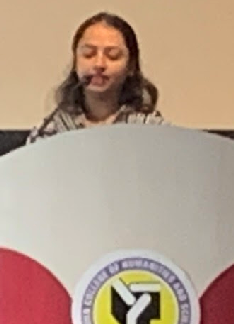
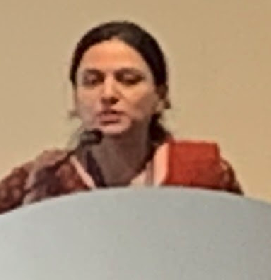
Following points were oriented by Ms. Anshu Tiwari- Head to Attendance Committee-
1. Ordinance 6086: The governing rule for attendance in the college, which sets clear guidelines and minimum requirements for students to be eligible for exams.
2. Minimum Attendance: 90%: Every student must attend at least 90% of the total classes held in each subject to maintain academic eligibility and avoid disciplinary action.
3. Monthly Defaulters List: A list of students with attendance below the required percentage is published every month, helping them take corrective action early.
4. Parents’ Meeting: Parents of students appearing in the defaulters list are called for a meeting to discuss reasons for low attendance and to ensure improvement.
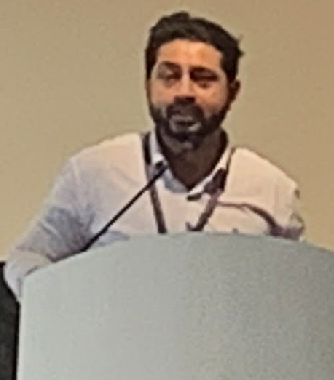
Following points were oriented by Mr. Sachin Gawali- Head of Examination Committee
1. Scheme of Examination: Continuous and comprehensive evaluation with a focus on internal assessment, projects, and skill-based tests in addition to end-semester exams.
2.ATKT: Flexible credit-based system where students can carry forward subjects with backlogs but must clear them within the prescribed credit completion period.
3.Unfair Means: Stricter digital and physical monitoring, AI-assisted plagiarism checks, and graded penalties to uphold academic honesty.
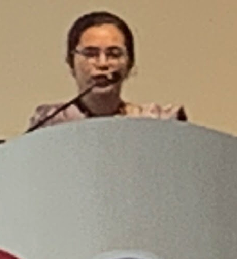
Following points were oriented by Ms. Gazal Asar- Head of Mentoring Committee
Objectives
1. Provide continuous academic & personal guidance.
2. Help identify strengths, interests, and career goals.
3. Support soft skills & professional attitude development.
4. Monitor progress and address challenges early.
Expected Outcomes
1. Better academic focus & personal growth.
2. Clear career goals.
3. Strong placement & internship readiness.
4. Improved confidence, communication & decision-making.
Following General Rule were oriented by Ms. Trupti Bidaye- HOD of B. Sc I.T
General Rules
1. Follow class timings as per schedule.
2. Maintain seating arrangement as per program.
3. Check college website regularly for notices.
4. Apply for scholarships within deadlines.
5. Wearing ID card on campus is compulsory.
6. Strictly follow anti-ragging regulations.
7. Avoid damage to infrastructure; penalties apply.
Following Post of Student Council were oriented by Ms. Jinal Shah- Student Council Committee Head
Objective: To represent students, coordinate activities, and promote cultural, technical, and sports events in the college.
Positions
● President
● General Secretary
● Campus Event Coordinators (2)
● Cultural Coordinator
● Joint Cultural Coordinator
● Sports Coordinator
● Joint Sports Coordinator
● Technical Coordinator
● Media & Marketing Coordinator
● DLLE Representative
● NSS Representative
● Lady Representative
The programme concluded with a Vote of Thanks delivered by Mr. Ravi Mishra, who expressed gratitude to the Principal, committee heads, faculty members, and students for their participation and attention.
The orientation provided students with a complete understanding of the autonomous system, institutional expectations, attendance and examination rules, committee roles, and available opportunities for growth.